

Wake Up Refreshed
Last Tuesday night, Sarah stared at her ceiling for what felt like hours. She’d already flipped her pillow three times, checked her phone twice (big mistake!), and counted more sheep than a New Zealand farmer. Sound familiar?
Here’s the thing that blew my mind: NASA research shows your bedroom environment affects sleep quality more than stress levels. Yet most of us spend more time picking out our morning coffee than creating the perfect bedroom for sleep.
I used to be a terrible sleeper until I discovered these simple bedroom tweaks. Now I fall asleep within 15 minutes and wake up actually refreshed (no joke!).
Ready to transform your bedroom into a sleep sanctuary? Let’s dive in.
1. Get Your Sleep Foundation Right: The Mattress and Pillow Game-Changer
Your mattress is literally the foundation of good sleep. But here’s what most people get wrong – they think “firm” automatically means “good.”
Match your mattress to YOUR sleep style:
- Side sleepers: Need softer mattresses that hug your curves
- Back sleepers: Medium-firm works best for spine alignment
- Stomach sleepers: Firmer surfaces prevent back strain
My friend Jake struggled with morning back pain for months. One weekend, he stayed at a hotel with a medium-firm mattress and slept like a baby. Turns out his “extra-firm” mattress at home was actually making things worse.
The pillow trick nobody talks about: Your pillow should fill the gap between your shoulder and neck perfectly. Side sleepers need thick pillows, back sleepers need medium, and stomach sleepers should go thin.
Pro tip: If you wake up with neck pain or headaches, your pillow is probably the culprit, not your mattress.
2. Color Psychology Secrets: Paint Your Way to Better Sleep

Colors literally rewire your brain chemistry. Harvard Medical School found that certain colors can increase cortisol (stress hormone) by up to 23%.
Sleep-friendly colors that work:
- Soft blues (reduces heart rate)
- Sage green (promotes calm)
- Warm grays (neutral and soothing)
- Cream or off-white (clean and peaceful)
Colors that sabotage sleep:
- Bright red (increases alertness by 19%)
- Orange (stimulates appetite and energy)
- Electric blue (suppresses melatonin)
I painted my bedroom walls from bright yellow to soft sage green last year. The difference was incredible – I went from taking 45 minutes to fall asleep to about 12 minutes.
Quick bedroom color upgrade: Can’t repaint? Swap your bedding, curtains, or add a few throw pillows in calming colors. Small changes, big impact.
3. Master Your Bedroom Lighting for Perfect Sleep

Here’s a shocking fact: Exposure to bright light just 2 hours before bed can delay sleep by up to 3 hours, according to the Sleep Foundation.
The lighting formula that works:
Evening (2-3 hours before bed):
- Dim overhead lights to 30% or turn them off completely
- Use warm table lamps (2700K bulbs or lower)
- Try Himalayan salt lamps for natural orange glow
Night:
- Blackout curtains or sleep mask
- Red night lights for bathroom trips (doesn’t disrupt melatonin)
My sister Emma was a chronic night owl until she installed dimmer switches. Now she naturally gets sleepy around 10 PM instead of midnight.
The $15 sleep hack: Get amber-tinted glasses to wear 2 hours before bed. They block blue light from phones and TV screens. Sounds weird, looks weirder, but works amazingly well.
4. Find Your Perfect Sleep Temperature (It’s Cooler Than You Think)
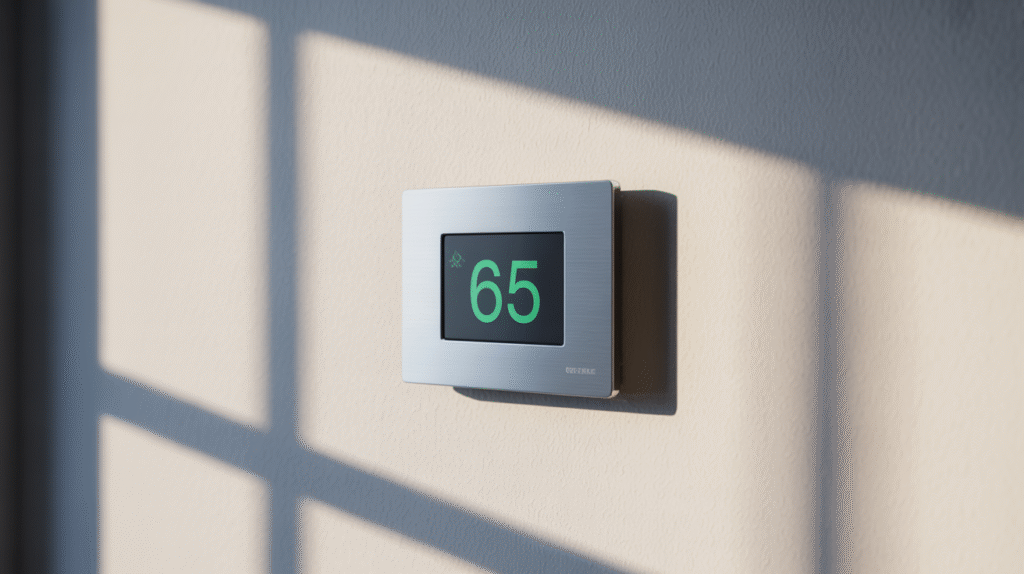
The magic number: 65-68°F (18-20°C).
Your body temperature naturally drops when you’re ready for sleep. A cool bedroom helps this process along.
Temperature control tricks:
- Set your thermostat 2-3 degrees cooler at night
- Use breathable cotton or bamboo sheets
- Point a fan toward your feet (cooling effect without direct breeze)
- Try a cooling mattress pad if you’re a hot sleeper
Real talk: My husband thought I was crazy for keeping our bedroom at 66°F in winter. But after one week of better sleep, he became a convert. Now he’s the one adjusting the thermostat!
5. Create Your Noise-Free Sleep Bubble
Even sounds you don’t consciously hear can fragment your sleep cycles and leave you groggy, according to WHO sleep studies.
Sound masking solutions:
- White noise machines (consistent, non-distracting background sound)
- Ceiling fans (dual purpose: noise + air circulation)
- Soft earplugs for sensitive sleepers
- Nature sounds apps (rain, ocean, forest)
The tech boundary rule: Keep phones, tablets, and TVs out of your bedroom. I know, I know – easier said than done.
Start small: Try charging your phone in the hallway for just one week. Use a regular alarm clock instead. The sleep improvement is worth the minor inconvenience.
6. Declutter Your Way to Deeper Sleep

UCLA researchers found that people with cluttered bedrooms have higher cortisol levels throughout the day and more trouble falling asleep.
The 5-minute nightly reset:
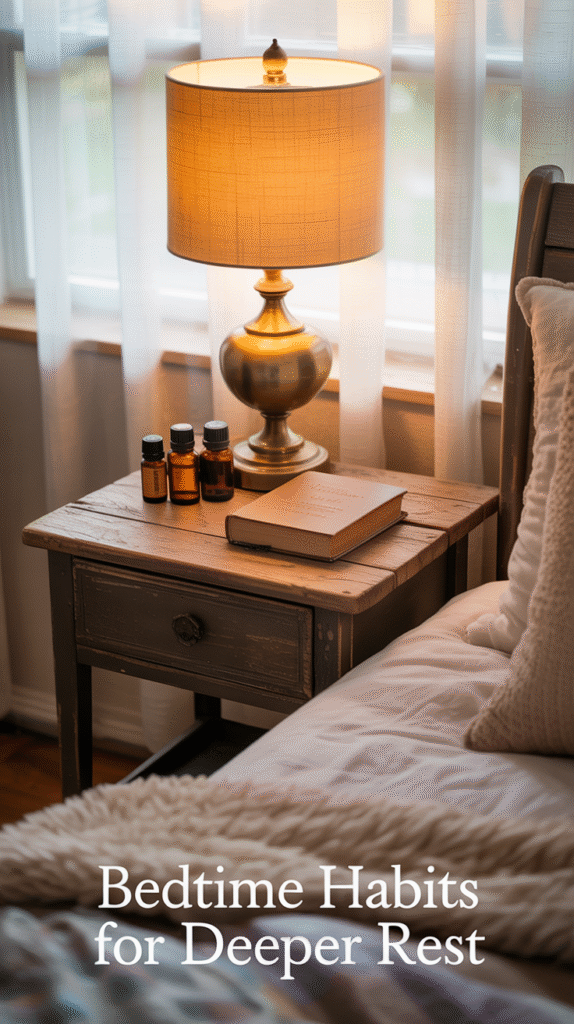
- Clear your nightstand (keep only essentials: lamp, book, water)
- Put clothes in hamper or closet
- Make your bed in the morning (sets positive tone for the day)
Storage solutions that actually work:
- Under-bed boxes for seasonal items
- Bedside baskets for daily clutter
- One designated chair for “tomorrow’s clothes”
I used to have piles of clean laundry on my bedroom chair for weeks. Once I got a small dresser and actually put clothes away, my stress levels dropped noticeably.
7. Add These Sleep-Boosting Extras for Next-Level Rest
Weighted blankets: The deep pressure stimulation can reduce anxiety by up to 63%, according to recent studies. Choose one that’s 10% of your body weight.
Aromatherapy that works:
- Lavender essential oil (reduces heart rate and blood pressure)
- Chamomile (natural sedative properties)
- Cedarwood (increases GABA, your brain’s “calm down” chemical)
My personal sleep ritual: Every night at 9 PM, I spray lavender pillow mist, turn on my salt lamp, and read for 30 minutes. This routine signals to my brain: “Time to wind down.”
Plants that purify air while you sleep:
- Snake plant (releases oxygen at night)
- Peace lily (removes toxins)
- Spider plant (easy to care for, great for beginners)
The Bottom Line: Start Tonight With One Simple Change
Creating the perfect bedroom for sleep doesn’t require a complete makeover or huge budget. Research shows that even ONE environmental change can improve sleep quality within 3-7 days.
Your homework for tonight: Pick the ONE change that resonates most with you. Maybe it’s dimming your lights earlier, setting your thermostat to 66°F, or moving your phone to another room.
Track your sleep for one week and see what happens. I bet you’ll be amazed at the difference.
Remember, quality sleep isn’t a luxury – it’s the foundation of everything else in your life. Better sleep means better mood, sharper thinking, stronger immunity, and more energy for the things you love.
Your bedroom should be your sanctuary, not just a place to crash. Which change will you try first? Drop a comment below and let me know how it goes. Sweet dreams! 🌙
Quick Reference: Your Perfect Bedroom Checklist

- [ ] Mattress matches your sleep position
- [ ] Room temperature 65-68°F
- [ ] Soft, calming colors on walls/bedding
- [ ] Warm lighting in evening, blackout at night
- [ ] White noise or earplugs for sound control
- [ ] Clutter-free surfaces
- [ ] Phone charges outside bedroom
- [ ] One sleep-promoting extra (weighted blanket, aromatherapy, or plants)
