


No Pills Required
Carol had tried everything. Physical therapy, countless doctor visits, prescription medications that left her foggy and exhausted. After three years of living with fibromyalgia pain that made getting out of bed feel impossible, she was ready to give up hope. Then her sister mentioned something that sounded almost too simple: “What if you just… stopped eating for a few hours longer each day?”
That conversation changed everything. Within six weeks of starting intermittent fasting, Sarah’s morning stiffness decreased by 70%. Her energy returned. For the first time in years, she could play with her grandchildren without wincing.
If you’re struggling with chronic pain and feeling frustrated with limited options, intermittent fasting might be the natural solution you’ve been searching for. This isn’t about extreme dieting or deprivation—it’s about giving your body the time it needs to heal itself from the inside out.
Understanding the Hidden Connection Between Inflammation and Your Pain

Most people think pain is just something that happens when you’re injured or getting older. But here’s what many don’t realize: chronic pain often stems from inflammation that’s been quietly building in your body for months or years.
This inflammation doesn’t just affect one area. It creates a cascade effect throughout your system, triggering pain in your joints, muscles, and even your nerves. Conditions like arthritis, fibromyalgia, chronic back pain, and autoimmune disorders all share this common thread of persistent inflammation.
Think of inflammation like a fire burning inside your body. Traditional pain medications are like throwing water on the flames—they might help temporarily, but they don’t address what’s feeding the fire. Intermittent fasting, however, works like removing the fuel source entirely.
Research shows that people with chronic inflammatory conditions have elevated levels of inflammatory markers in their blood. These markers—with names like IL-6, TNF-alpha, and C-reactive protein—are essentially your body’s alarm system stuck in the “on” position.
How Intermittent Fasting Becomes Your Body’s Natural Healing Mode
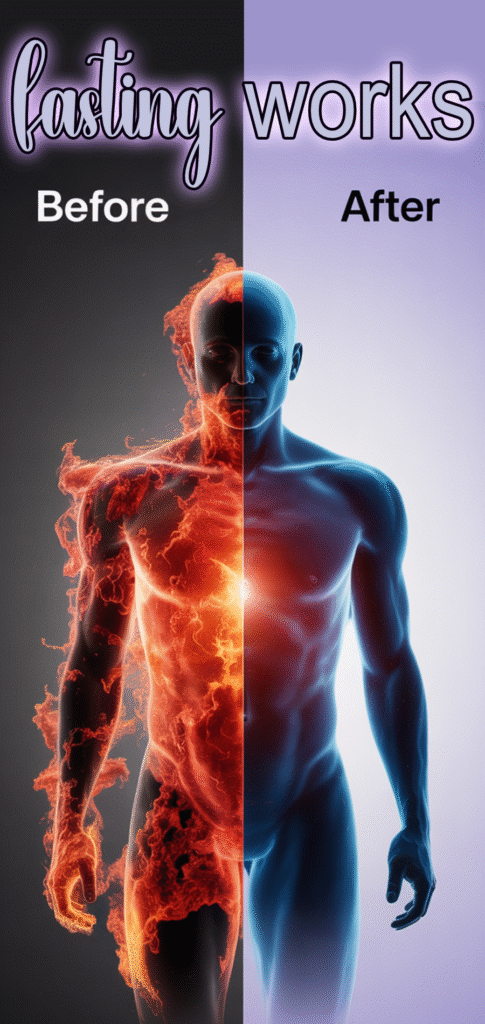
When you fast, something remarkable happens inside your cells. Your body shifts from constantly processing food to focusing on repair and cleanup—a process scientists call autophagy.
During this cellular housekeeping, your body literally cleans out damaged proteins and cellular debris that contribute to inflammation. It’s like having a maintenance crew come in while the office is closed, fixing everything that’s been broken or worn down.
But that’s not all. Intermittent fasting also:
Stabilizes your blood sugar and insulin levels. When these stay steady instead of spiking and crashing throughout the day, your body produces fewer inflammatory chemicals. Less inflammation equals less pain.
Reduces oxidative stress. This is the cellular damage that happens when your body can’t keep up with neutralizing harmful free radicals. Fasting gives your antioxidant systems time to catch up and repair this damage.
Resets your immune system. Instead of being constantly reactive, your immune system learns to respond more appropriately, reducing the autoimmune-like reactions that can trigger pain flares.
One study followed people with rheumatoid arthritis who practiced intermittent fasting for 12 weeks. Participants saw a 40% reduction in pain scores and significantly improved joint mobility—results that lasted even after the study ended.
Simple Intermittent Fasting Schedules That Actually Work for Real Life

The beauty of intermittent fasting for pain relief is that you don’t need to do anything extreme. Here are three beginner-friendly approaches that can fit into your current routine:
The 12:12 Method (Perfect for Testing the Waters) Fast for 12 hours, eat during 12 hours. If you finish dinner at 7 PM, don’t eat again until 7 AM. Many people are already doing this without realizing it. This gentle approach helps your body start experiencing the benefits without major lifestyle changes.
The 16:8 Method (The Sweet Spot for Most People) Fast for 16 hours, eat during an 8-hour window. Try eating between noon and 8 PM, then fasting overnight and through the morning. This schedule fits naturally with most work and family routines while providing significant anti-inflammatory benefits.
The 5:2 Method (For Those Who Prefer Flexibility) Eat normally five days a week, then limit calories to 500-600 on two non-consecutive days. This approach works well for people whose pain levels vary day to day, allowing you to adjust your fasting schedule based on how you’re feeling.
Choosing What Works for Your Energy Levels
If you’re dealing with chronic fatigue alongside your pain, start with 12:12. If you have more energy in the mornings, try ending your eating window earlier in the evening. The key is listening to your body and adjusting as needed.
Remember: you’re not trying to win a fasting competition. You’re creating a sustainable lifestyle change that supports your body’s natural healing processes.
The Foods That Fight Pain During Your Eating Windows

What you eat during your non-fasting hours can either support your healing or undermine it. The goal isn’t perfection—it’s progress.
Foods That Act Like Natural Medicine:
- Fatty fish (salmon, sardines, mackerel): Rich in omega-3 fatty acids that directly counter inflammation
- Turmeric: Contains curcumin, which studies show can be as effective as some anti-inflammatory medications
- Leafy greens (spinach, kale, arugula): Packed with antioxidants that help repair cellular damage
- Berries: Contain powerful compounds that reduce inflammatory markers
- Olive oil: Provides healthy fats that support your body’s anti-inflammatory processes
Foods That Can Fuel the Fire:
- Refined sugars and processed foods that cause blood sugar spikes
- Vegetable oils high in omega-6 fatty acids (soybean, corn, sunflower oil)
- Excessive processed grains that can trigger inflammatory responses in sensitive people
The Hydration Connection
During fasting periods, staying well-hydrated becomes even more important. Dehydration can increase inflammation and make pain worse. Aim for clear urine as your hydration goal, and consider adding a pinch of high-quality sea salt to your water to maintain electrolyte balance.
Special Considerations for Seniors and People Managing Chronic Conditions

If you’re over 60 or taking medications for chronic conditions, intermittent fasting can still be incredibly beneficial—you just need to be a bit more careful about how you approach it.
Working With Your Medications: Some medications need to be taken with food, while others work better on an empty stomach. Don’t adjust your medication timing without consulting your healthcare provider first. Many doctors are becoming more supportive of intermittent fasting as research continues to show its benefits.
Warning Signs to Watch For:
- Dizziness or lightheadedness that doesn’t improve with hydration
- Extreme fatigue that’s worse than your usual baseline
- Significant mood changes or brain fog
- Any worsening of your existing condition symptoms
Starting Extra Slowly: If you’re dealing with multiple health issues, consider extending your overnight fast by just one hour at a time. Instead of jumping into 16:8, try 13:11 for a week, then 14:10, gradually working your way up as your body adapts.
Real Stories from Real People: When Fasting Changed Everything

Michael, 67, Retired Construction Worker After 40 years of hard physical labor, Michael’s knees and back screamed every morning. “I thought this was just my life now,” he says. His daughter convinced him to try the 16:8 method. “Within three weeks, I was walking up stairs without holding the railing. My wife hadn’t seen me move this well in years.”
Jennifer, 43, Teacher with Fibromyalgia Jennifer had tried every fibromyalgia treatment available. “The pain was stealing my life. I couldn’t be the mom or teacher I wanted to be.” She started with 12:12 fasting and gradually extended to 16:8. “Six months later, my pain levels went from an 8 to a 3. I have my life back.”
Robert, 55, Autoimmune Arthritis Despite being on multiple medications, Robert still had frequent flare-ups that kept him home from work. “Intermittent fasting didn’t replace my medical treatment, but it made everything work better. My rheumatologist was amazed by my latest lab results.”
Tracking Your Progress: Keep a simple pain journal noting your daily pain levels (1-10 scale), energy levels, sleep quality, and mood. Many people start seeing improvements in the first 2-3 weeks, but the most significant changes often happen between weeks 6-12.
Your Success Strategy: Making Fasting Work in the Real World

Handling Hunger Like a Pro: The first week is the hardest. Your body is used to regular meal timing, and it will protest. Here’s how to push through:
- Drink herbal tea, black coffee, or sparkling water when hunger hits
- Stay busy during your usual meal times
- Remember that hunger comes in waves—it will pass
- Plan engaging activities during your fasting hours
Gentle Movement That Enhances Fasting Benefits:
While you’re fasting, your body is in repair mode. Light movement can enhance this process without overtaxing your system:
- Morning stretches or gentle yoga
- Short walks in nature
- Meditation or deep breathing exercises
- Light household activities
Avoid intense workouts during fasting periods, especially when you’re starting out.
Supplements That Support Your Healing:
Consider these evidence-based supplements to enhance your intermittent fasting benefits:
- Omega-3 fish oil: 1000-2000mg daily to support anti-inflammatory processes
- Curcumin with black pepper: Enhances the anti-inflammatory effects of turmeric
- Magnesium: 300-400mg daily to support muscle relaxation and sleep quality
- Vitamin D3: Many people with chronic pain are deficient, and adequate levels support immune function
Always check with your healthcare provider before adding new supplements, especially if you’re taking medications.
Your Pain-Free Future Starts With One Simple Change
Intermittent fasting isn’t a magic cure that will eliminate all pain overnight. But for many people struggling with chronic inflammation and persistent pain, it’s become the natural, cost-effective tool that finally gives them their lives back.

The science is clear: when you give your body regular breaks from digesting food, it can focus its energy on healing and repair. The inflammation that’s been driving your pain begins to calm down. Your energy returns. You start feeling like yourself again.
Start small. Choose one fasting schedule that feels manageable with your current routine. Listen to your body. Track your progress. And remember that even small improvements compound over time into life-changing results.
Your pain has been patient—it’s built up slowly over time. Give your healing the same patience. In a few months, you might find yourself telling your own success story, inspiring someone else who’s exactly where you are right now.
The most powerful healing often comes not from adding something to your life, but from giving your body the space and time it needs to heal itself. That healing can start with your very next meal—or the decision to delay it just a little longer than usual.
Ready to begin? Choose your fasting schedule, mark it on your calendar, and start tomorrow. Your future self will thank you.